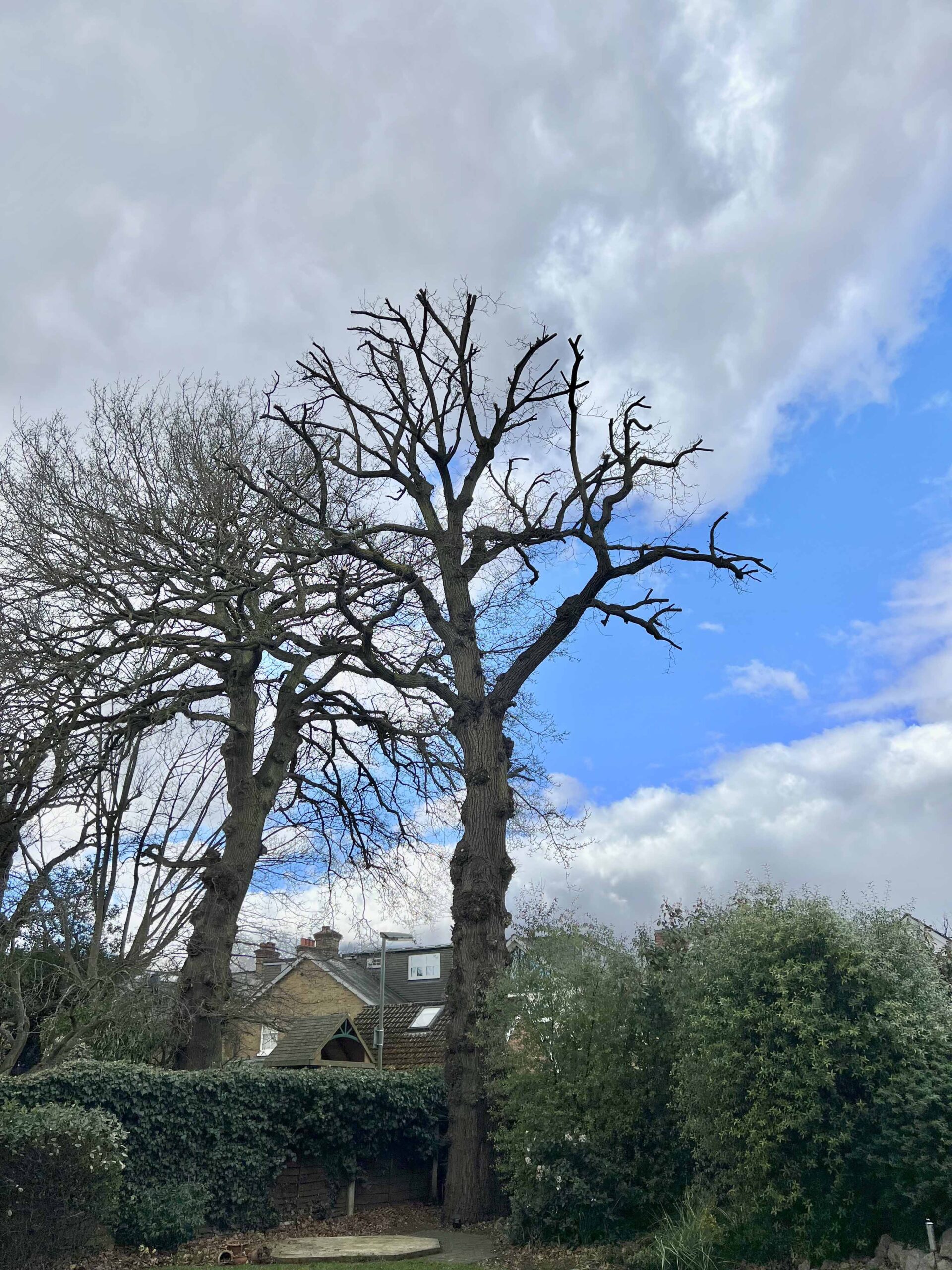

This project involved carrying out a carefully planned canopy reduction on a mature oak tree within a well-established residential garden. The work was undertaken for one of our regular customers, for whom we provide ongoing tree care across the property throughout the year. Maintaining consistency in approach is essential when managing multiple trees within the same garden, ensuring the overall space remains balanced, safe and visually appealing.
The oak tree had developed a broad, dense canopy that was beginning to dominate the surrounding area. To manage its size and support long-term health, the canopy was reduced by approximately two metres. This level of reduction allowed the tree to be brought back into proportion with the garden while retaining its natural shape and character. Oak trees respond well to sympathetic pruning when cuts are made correctly, making canopy reduction an effective way to manage growth without placing unnecessary stress on the tree.
Before work began, our arborists assessed the structure of the tree and identified suitable growth points for pruning. Cutting back to appropriate growth points is vital in encouraging healthy new shoots and reducing the risk of weak regrowth or decay. Each branch was shortened carefully, following the tree’s natural form and maintaining even weight distribution throughout the canopy. This method helps improve air circulation and light penetration while supporting strong, healthy growth in the following season.
As part of the work, branches were removed in a controlled manner using professional climbing and lowering techniques to ensure safety and protect surrounding planting and garden features. All cut material was processed efficiently and removed from site, keeping disruption to a minimum. Throughout the project, the team worked methodically to maintain a tidy workspace and ensure the garden remained accessible and well cared for.
Because this was an existing client with multiple trees under our care, the canopy reduction was carried out with the wider garden layout in mind. Regular maintenance across several trees helps create a cohesive look, prevents individual specimens from becoming overgrown and reduces the likelihood of emergency work being required in the future. This planned approach allows trees to be managed proactively rather than reactively.
Once the work was complete, the oak retained a well-balanced, natural appearance but with a noticeably lighter and more open canopy. The reduction improved light levels within the garden and set the tree up for healthy regrowth in the next growing season. The customer was once again very pleased with the standard of workmanship and the ongoing care provided.
This project highlights the benefits of regular, professional tree maintenance and the importance of tailored pruning to keep mature trees healthy and gardens looking their best.